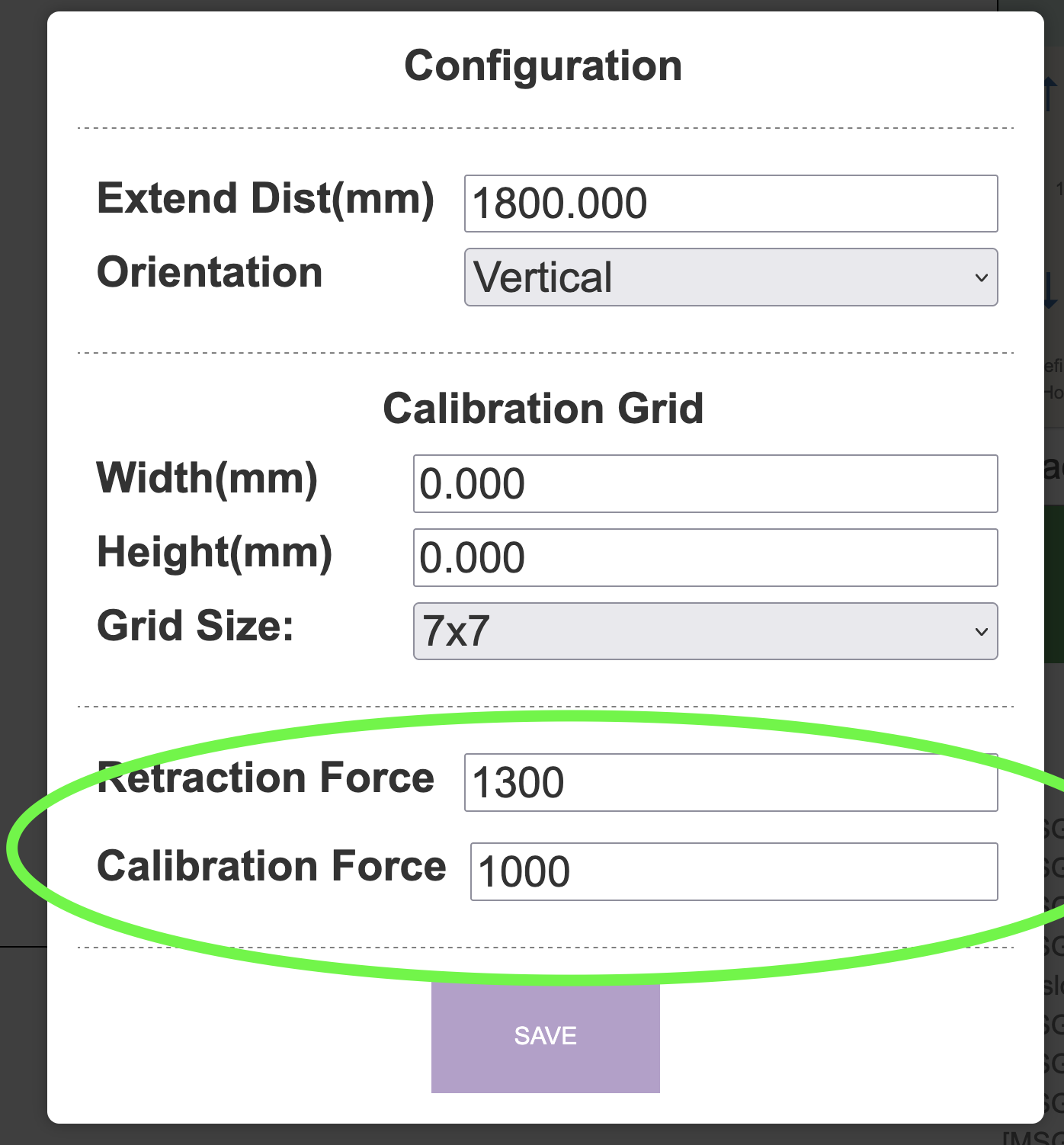
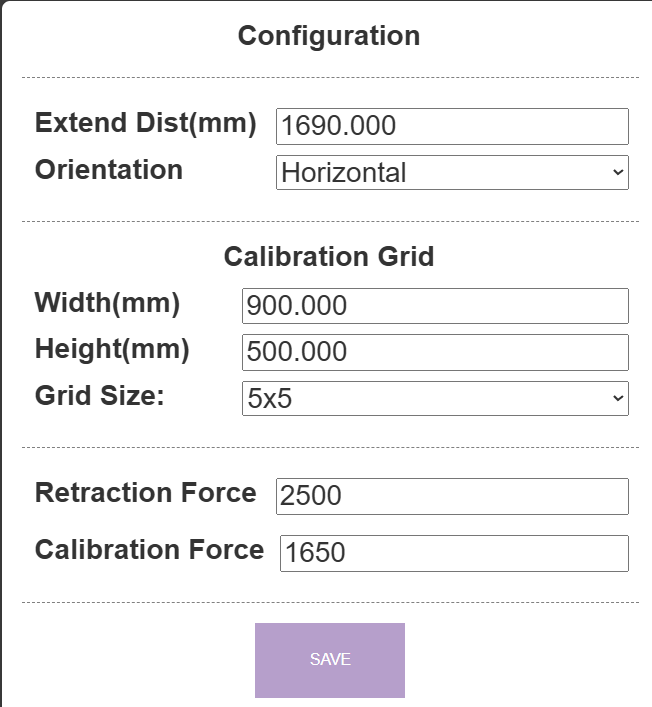
I was able to calibrate my set up with good results (the latest yaml file is attached.) I was able to make a successful small cut, then set it up for a large cut (.nc file is attached). The second cut stopped mid-way through, so I stopped it and tried to cut it again today.
I extended the belts and took up slack multiple times. Each time it ended with “Maslow is not ready to move. Could not perform Jog. Belt lengths are unknown.” So it’s impossible to move forward.
The belts don’t tighten consistently, and every time I attempt to use it another issue pops up.
So far I’ve only been able to make 1 decent cut, the rest are garbage or I can’t get the machine to work (after months of trying.) The serial files from my last 3 attempts are included. I’m not certain this thing will ever work the way it was described.
Also, note that these settings worked for me to cut on Sunday. It didn’t work today while I changed nothing. The retraction force was changed from 2200 to 2500 during my last attempt. That is what is so aggravating - I set it up the same way on two days - one day it works, the other it doesn’t…
This is really really high which makes me think that something is preventing the spools from spinning freely. Are you seeing that all four need that high of a number to retract, or is there one in particular that seems to be binding up?
The bottom left belt is usually problematic. I’ve also had issues with the upper right belt not retracting. I don’t see anything that is preventing the spools from spinning freely.
That Retraction force is really high, what is the lowest force you can get the belts to reliably retract? Do all the belts need that much force to retract?
I sanded, polished and lubricated the arm part the spools rotate on and could still pull the belts in reliably at 900. I realise it a pain to pull the Maslow apart, but it may be the next step for you. If some of the belts retract at a lower value you may not need to touch those. Also I found that setting the two force values to the same was more reliable.
I’ve had the Maslow apart a number of times already - I’m not looking forward to doing it again. What did you use to polish the arms, and what did you use to lubricate them?
The bottom left belt is usually the culprit but the upper right one is starting to act up too.
I can set the two values to be the same.
Why does this thing work one day and not the next? It is terribly inconsistent.
The bottom left belt is usually problematic. I’ve also had issues with the
upper right belt not retracting. I don’t see anything that is preventing the
spools from spinning freely.
I have seen arms get much stiffer from one day to the next. in one case I found
the gears were loose on the motor shafts, but just spinning the spool on the
arms was very stiff.
I’ve had the Maslow apart a number of times already - I’m not looking forward
to doing it again. What did you use to polish the arms, and what did you use
to lubricate them?
I’m not listing my lubrication as I don’t have enough time on it to know how it
will hold up.
The bottom left belt is usually the culprit but the upper right one is starting to act up too.
with the belts not pulled fully tight , try wiggling the spools, they should
turn freely for just a tiny distance (gear backlash), but I suspect you will
find it very hard to turn them at all.
Why does this thing work one day and not the next? It is terribly
inconsistent.
part of it is plastic parts. The 4.1 arms are too snug a fit against the spools
(there is a new generation of spools now that have a better fit) and the arms
can distort slightly when you tighen the stock screws in them and those slight
bulges can cause problems.
I used fine grain sandpaper on the hubs, I didn’t want to sand the spools in case I needed to replace them later. I used a mixture of graphite and petroleum grease to lubricate them. It was pointed out to me that some plastics react badly with grease, so do your research on what lubricants are recommended.
I suggest before pulling the Maslow apart again, you identify which arms require more force. To do that try lowering the retract value and do extend, retracts until belts fail to retract. Make a note at which value each belt requires to retract. The lower you can get these values the more accurate the Maslow appears to be.
Several people have made tools and techniques to help with this, look for sandpaper in the Search
I also recommend replacing the screws which hold the arms together with a slightly longer screw.
The belts have a steel core and accumulate tension; the arms are made of plastic, and the accumulated tension causes them to close and tighten against each other. When you manage to work with a retraction force of 900, it no longer accumulates as much tension.
I use graphite; it’s a powdered lubricant that locksmiths use.
And this was my technique for sanding the arms to make them a perfect circle
I had similar issues with tight spools and after cutting my first or second piece. I found that a small amount of sawdust/chips/debris got into the ends of the belt arms. I would extend all and help them extend while using compressed air from every angle possible to remove any dust. After 2 or 3 extend all/retract cycles blowing out any contamination it was back to being able to move at a motor drive of 1000-1300. I had a bud 3d print the dust extractor and have not had the problem since installing it.
Hope this might help