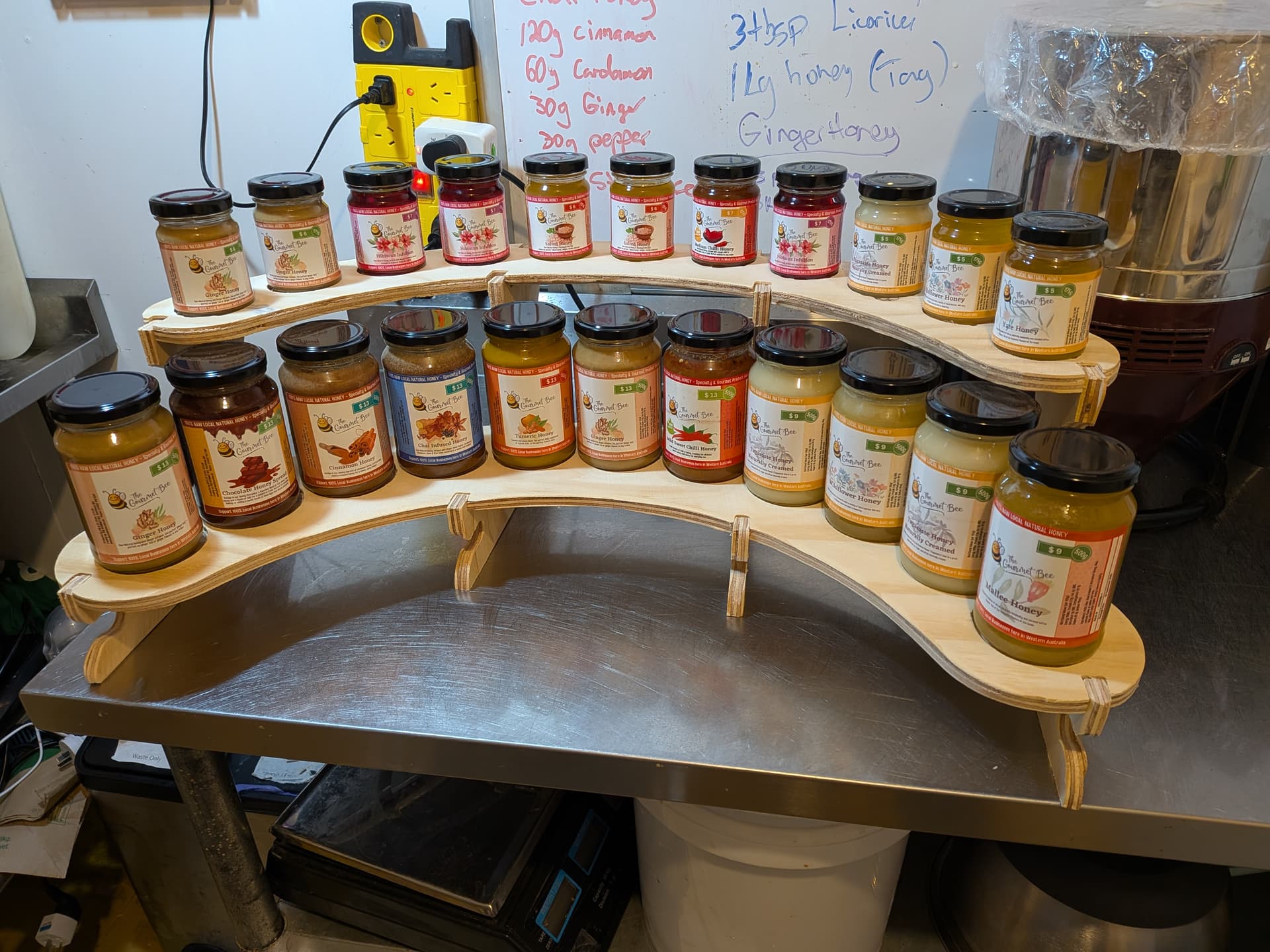
I have ordered some 4mm 2 flute. Also got a hold of some used 6mm 3 flute ones. Discarded from a CNC company because of “statistical end of life“ for their use, but they seem plenty sharp for my use.
[quote=“bar, post:938, topic:6186”]
These are some of the biggest pockets that I’ve seen anyone do
[/quote]
It didn’t actually hit me that the size of the pockets could be a problem until I had gotten well into the cut and remembered that The Armadillo needed some footing. Fortunately it went well over expectations
I think it’s close to the limit unless we extend the diameter of the sled or add some kind of support.
It has an import function for svgs and png/jpgs and a limited design feature.
If I can’t clean it up enough with the built in import. I will use Inkscape to trace bitmap and fine tune the image and save as svg. Then import it into Carbide Create to assign cut paths and pockets.
After I create gcode, I send it through Lee’s gCodeClean (you can find a link on the forums) to clean up the gcode and minimize traveling.
It will be easier for you to find the images, vectorize them in Corel Draw, and export them as DXF files; then you’ll have the drawing ready to generate the G-code.
I needed an incline to stretch my legs at the office. A quick design, some old surplus dirty ply, and an overbuilt stretcher was available the same night
Have hade some issues with friction in the spools, so need to look at some sanding there.
Hi, I haven’t contributed anything to this thread yet, but I figured why not. Even a small project can inspire someone.
I needed a sink for my caravan, nothing on the market appealed to me, so I thought,. I’ll make it out of plywood. It’s single-sided laminated birch 18mm plywood. I didn’t bother with the slopes, because I wouldn’t sand it so thoroughly in my workshop. It’s quite small inside, but it’s enough to wash your hands or face in the morning.
glued, and then sanded and then varnished the non-laminated surfaces with polyurethane.
One of the few small projects for my caravan, I’ll show you more in time.
I used two-component polyurethane varnish matte TELPUR C100 + hardener. Here in Europe, for example, this
I don’t have long-term experience yet. I applied it 2 times and the edges and surfaces are beautifully sealed and I’m not afraid of the durability of this surface treatment.